

Background
HIVQUAL-Kenya was launched in 2009 with completion of baseline data in 2010. A Ministry of Health (MOH) leader and stakeholder training was conducted in May 2009, including participation by leadership from the National AIDS/STI Control Program (NASCOP), the MOH, CDC Kenya and implementing partners. Fifteen initial clinics were selected, 5 in each of three provinces including Nairobi, Nyanza and Coast, for baseline data collection. Performance measurement indicators were drafted covering adult, pediatric and prevention of mother to child transmission (PMTCT) areas of care through a formal engagement process with key stakeholders, which was facilitated by HEALTHQUAL.
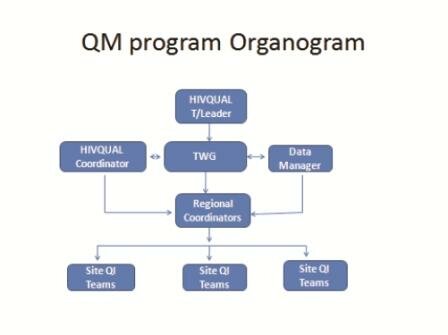
A technical working group (TWG) was established in October 2009, designed to function as the HIVQUAL-Kenya steering and advisory committee. The TWG finalized the list of indicators and assisted with the adaptation of HIVQUAL software to support data collection activities.
Demographic Data
HIVQUAL Kenya has since expanded and is currently active in 34 clinics in 6 regions.
- Population: 40.5 Million
- HIV prevalence:
- Adult men age 15 – 54 years – 4.3%
- Women age 15 – 49 years, not pregnant – 8.0%
- Women age 15 – 49 years, pregnant – 8.3%
- General adult population age 15 – 54 years – 6.3%
- Other information on HIV epidemic
- HIV incidence: 132,00 adult and 34,000 pediatric new infections per year
- Percent of health facilities providing HIV testing and counseling – 63%
- ART coverage
- Among adult patient who need ART – 74%
- Among children under 14 years who need ART – 21%
- TB/HIV prevalence: 44 % of TB patients have HIV
HIV/AIDS Epidemic:
HIV prevalence among non pregnant adults age 15 – 49 years is estimated to be 8.0% while among pregnant women, it is 8.3%. HIV prevalence among adult men age 15 – 54 years is estimated at 4.3%. In Kenya today, the number of people estimated to be living with HIV is 1.5 million. There were approximately 100,000 new infections in 2009 for adults (15+).
The Kenya MOH through NASCOP has significantly scaled-up ART program, increasing the number of eligible patients on ARVs from 11,000 in 2003 to 432,621 in 2010 (NASCOP). By the close of 2011, there were 1,100 treatment centers nationwide offering ART, with continued decentralization of ART treatment.